
The $80 Seat
In 1995, I flew to Chicago just to watch the Bulls play the Knicks at the United Center. Let me put that in context. This was not some mid season game between two middling teams. The Bulls had Michael Jordan. They had Scottie Pippen. They had Luc Longley. They were on their way to 72 wins that season, the best record in NBA history at that point. And I only paid $80.
The game had sold out weeks before I arrived, which tells you everything you need to know. The price was too low. I got a bargain. Someone subsidised my experience. I just did not know it at the time.
This month, the Knicks made the NBA Finals for the first time in 27 years. They have not won a title since 1973. A quarter of New York City’s population was not even alive the last time this team played for a championship. For Game 3 at Madison Square Garden, the cheapest available ticket was $9,006, and that was for a seat in the nosebleeds. Total ticket sales for the 19,000 seat arena were estimated at $300 million, with some forecasts as high as $400 million. A single seat behind the Knicks bench listed for more than $67,000.
Fans are outraged. The culprit, they say, is dynamic pricing.
But here is the question nobody is asking. Was $80 actually the right price in 1995? Or was it just the price that happened to exist before anyone bothered to measure demand properly?
Interestingly, when the Knicks released more tickets ahead of Game 3, prices actually came back down. That is not madness. That is a market doing exactly what markets do. Supply increased, and price responded.
Meanwhile, in Seattle
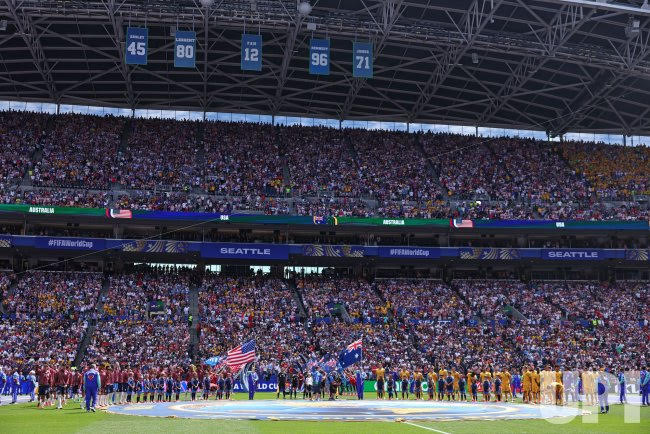
Some friends of mine flew from Australia to watch the Socceroos play in the FIFA World Cup. They won tickets in the ballot for two group stage games. But not the big one. Not USA versus Australia.
For that match, the cheapest ticket on resale sites has surged to around $2,700 Australian dollars. My friends are not going. They are being priced out.
My English friends did not have the same problem. England’s group stage draw paired them against Croatia, Panama and Ghana. No home nation in sight, no scarcity premium, no crowd of three hundred million fans competing for the same ticket. They got to watch football. My Australian friends got a lesson in economics instead.
It is tempting to look at this and say dynamic pricing is the villain. But that misreads the situation.
Greater Seattle has a population of four million people. The United States has three hundred million. A meaningful proportion of those people would pay almost anything to watch their team play in a World Cup on home turf. My Australian friends are competing against that. Not against a pricing algorithm. Against sheer weight of demand away from home.
Price is not the problem. Price is just the messenger.
What Price Actually Does
When supply is fixed, price is the only mechanism available to decide who gets the product. Take price out of the equation and you do not eliminate the problem. You just replace it with a different rationing system. First come first served. It’s not what you know, it’s who you know. None of those systems are obviously more fair, and none of them generate any value for the seller.
A US Soccer fan quoted in the Australian Financial Review put it with refreshing bluntness. “It’s unfettered capitalism at its worst. But that’s the American way.”
He is right about the capitalism part. But not the “worst” part.
Consider what fixed pricing actually produces. In 1995, I got a seat to watch the greatest basketball team ever assembled for $80. The Bulls left a fortune on the table. Those dollars did not disappear. They stayed in my pocket. I was the winner. The fans who missed out entirely were the losers. Dynamic pricing would have meant some fans paid more, but more fans would have had the opportunity to pay at all. At the right price, more seats get sold to people who genuinely value them most.
No matter which allocation system you use, only 19,000 people get to sit in a 19,000 seat stadium. The choice is not between everyone watching and some people watching. The choice is which 19,000 people get the seats, and how much value gets captured along the way.
There is no pricing system that makes everyone happy when demand exceeds supply. The only honest question is who benefits from the gap between price and value. And charging the right price does not just benefit the seller. It puts more money back into the game itself. Money to attract the best athletes, who might otherwise have chosen another sport or another career. Money to develop junior talent. Money to take the game to regional areas and developing countries that would otherwise never get a look in.
And There Is No Industry Where Supply Is More Fixed Than Residential Property
A sports stadium has a fixed number of seats. But next season, they can build a bigger stadium. Or add another game to the schedule. Or stream the match to a billion screens.
A residential building has a fixed number of apartments. Full stop.
When demand for an apartment exceeds supply, the gap between the asking rent and the true market rent does not disappear. It gets captured by whoever is lucky enough to sign the lease. The operator loses it. Every week. Quietly. Without anyone writing angry articles about it.
The difference is that nobody complains when rents are set too low. Tenants are delighted. Operators simply do not realise what they are giving away.
There is also a longer term effect. Higher rents mean higher returns for developers. Higher returns mean more capital flows into building new apartments. More apartments mean more roofs over more heads. Underpricing rents might feel generous in the short term, but in the long term it slows down the very supply growth that would make housing more affordable.
Dynamic pricing in Build to Rent is not about squeezing tenants. It is about making sure the price reflects reality. About not subsidising some tenants at the expense of others who never even got a chance to apply. About running a building like a business rather than a lucky dip. Get it right, and it’s a slam dunk for both sides.
My friends in Seattle will watch the USA versus Australia match from a bar. They will have a great time.
But the BTR operator who sets rents by gut feel, or last year’s spreadsheet, or whatever the building down the road is charging? They are giving away front row seats at $80 a night. Every night. And they don’t even know it.